
MonoVision Laser Vision Correction
We all have a Dominant Eye which is the eye which we primarily sight distant objects with. Usually, if the patient is right handed, it is the right eye. It is easy to test and we can usually determine this just by asking which eye the patient uses for photo shooting. The other, Non Dominant Eye, is obviously important in our overall sight, however it is not the primary eye which the brain relies upon for visual input. It is with this knowledge that we can adjust our LASIK Laser Vision Correction in order to help accommodate patients that are over 40 years of age, and who would ordinarily require drug-store reading glasses (magnifiers) for near vision tasks.
Presbyopia is the name of the condition which affects all people over the age of 40-45. Once we develop Presbyopia, our natural lens inside our eyes weakens, and we are no longer able to focus and refocus from distance to near. In patients that have had LASIK Laser Vision Correction, or in people who just see well at distance naturally, the development of Presbyopia results in the inability to see objects up close (reading) without the aid of magnifying reading glasses. As we age, the Presbyopia always worsens, resulting in the need for stronger reading glasses, and most often, the need for computer (intermediate range) glasses also.
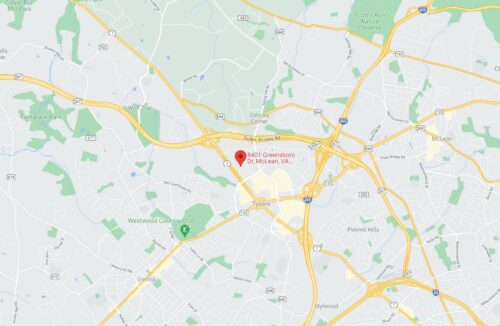
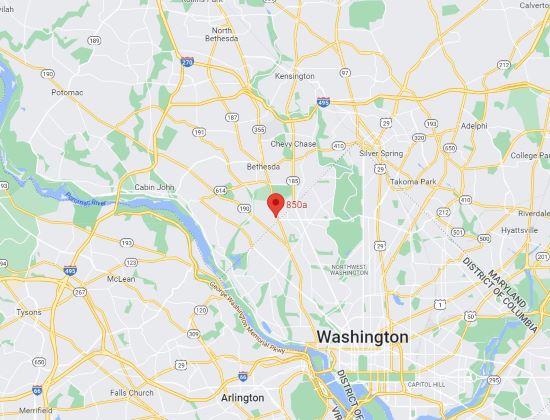
 Patients that are over the age of 40, and who are having their distance vision corrected fully in both eyes, will at some point need to buy drugstore reading glasses (readers). This is due to the Presbyopia. In an attempt to limit the need for readers, and to keep some near vision while correcting the distance vision, some patients may elect to do a MONOVISION adjustment to their Laser Vision Correction. We treat the Dominant Eye with a full correction, targeting 20/20, so that the patient can see distance well – and then we slightly under-correct the Non Dominant eye so that it can still read menus and cell phones, etc. With BOTH EYES OPEN, the patient can see both distance and near objects. This is ONLY possible if there is a MONOVISION adjustment made in the procedure, otherwise the patient sees distance only. We offer monovision laser vision correction in the Virginia, Maryland and Washington, DC area from our centers in McLean, Chevy Chase and Chantilly.
Most commonly, this MONOVISION adjustment is very well tolerated by the patient. Usually when we first explain it, most people think it sounds like they will have headaches and dizziness, but this is not a usual experience. We can trial MONOVISION with contact lenses before the surgery, so as to simulate the outcome. This way, the patient has the ability to wear the contacts for a few days, sleeping in them also, and then report back to us if they like the MONOVISION adjustment or not.
Since there is a small overall compromise with this MONOVISION technique in the visual quality (one eye for near and one for distance isn’t as sharp as both for distance), it is important that we do this on the right patients. Exacting, perfectionist-type personalities may not like this compromise.
Also, we do not perform this modification on pilots, law enforcement or athletes who require perfect distance vision and excellent depth perception as well.
So, if you are over 40, inquire about the MONOVISION approach to LASIK Laser Vision Correction offered at our Holzman Laser Vision centers in the Washington DC Metro area. Many patients opt for this approach and love the freedom from glasses at both distance and near. If you are under 40, no worries.. you don’t have Presbyopia yet and you will be able to see both distance and near without glasses following LASIK, (until of course you get older and then develop need for readers!)